
Open Cooling
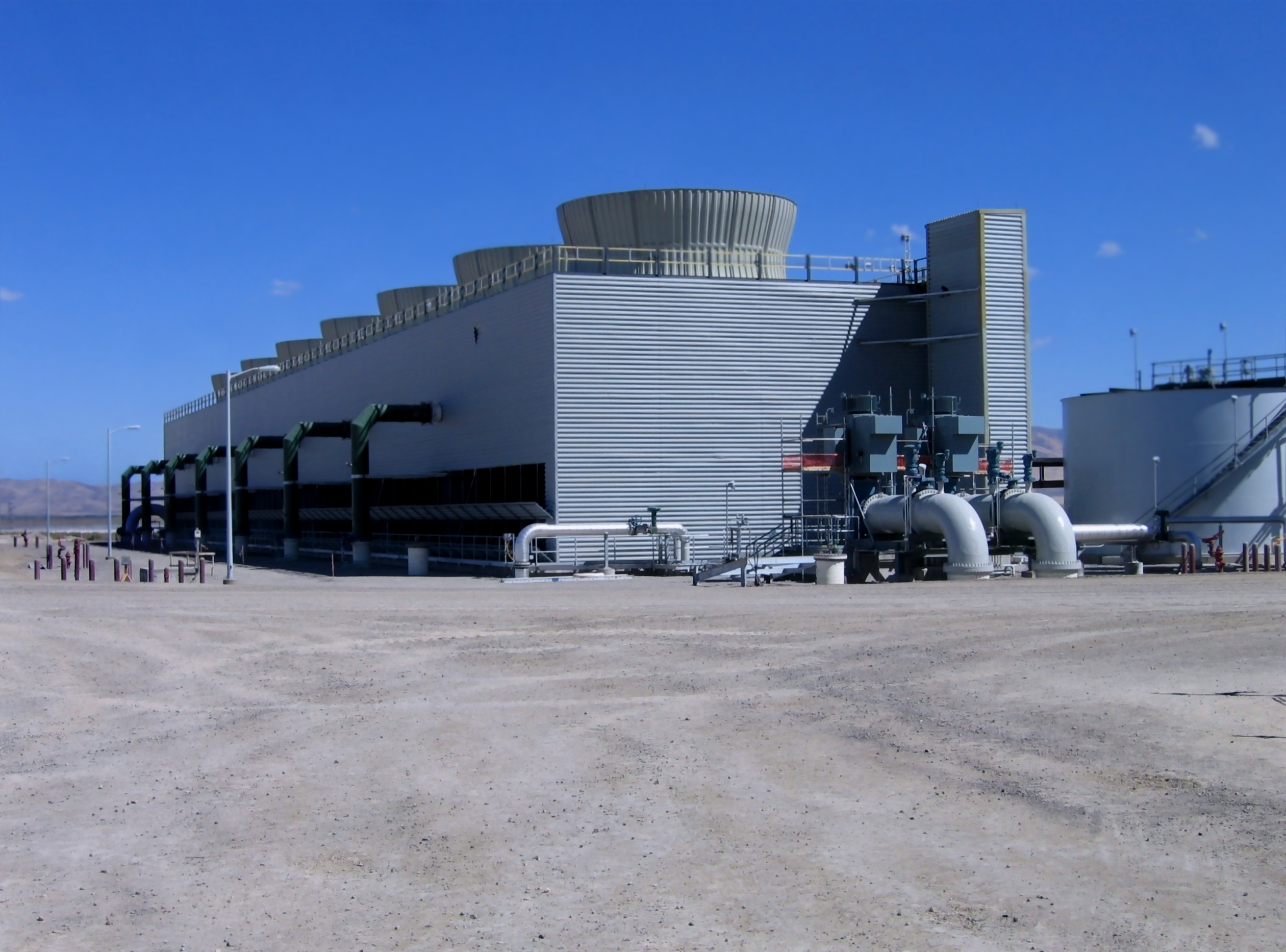
Treatment4Water supplies water treatment chemicals for open evaporative cooling water systems.
Inhibitors
Treatment4Water provides a comprehensive range of formulated own-label scale and corrosion inhibitors for open evaporative cooling systems. Our proven formulations address issues related to scale formation, general solids fouling, and multi-metal corrosion.
Biocides
Treatment4Water provides a comprehensive range of biocides for open evaporative cooling systems. We stock a wide selection of oxidizing and non-oxidizing biocides covering products to control algae, bacteria, and fungi found commonly in open evaporative cooling systems. Many of our products have a proven efficacy against Legionella.
Inhibitors
Prevention of scaling, fouling, and corrosion in an open cooling system is vital to its safe and efficient operation. Our team of experts are on hand to give valuable selection and application guidance for all our open cooling system inhibitors. In addition, we have a simple but effective one-page selection tool available for those with more experience.
Product Guide: Industrial Open Cooling Water Treatment Chemicals
SYN-QUEST
Properties
Dosing and Control
409: Supplementary Yellow metals inhibitor
Benzotriazole
Closed systems – dose at 75-140ppm
Open evaporative systems – dose at min 3ppm for maintenance and min 9ppm for passivation
410: Silicone Anti-foam
Antifoam Emulsion
Dose 50-100 ppm as product to measure 3-6 mg/L as Zinc (Zn)
419: Zinc Phosphate Inhibitor
Zinc, Phosphate, Phosphonate, BTA Polymer
420: Halogen Stable Corrosion Inhibitor
Azole, Dual Phosphonates, Molybdate. Calcium 65 mg/L (min) as CaCO3 in system
100 – 140mg/L in the system
Maintain 5 – 7mg/L as MoO4
433: Open System Corrosion Inhibitor
Molybdate, Phosphonate, BTA
350-1500 mg/l product
preferably in a system with the calcium hardness of at least 65mg/l (as CaCO3)
442: Corrosion Inhibitor Domestic Water
A Silicate phosphate product for red water prevention in domestic water systems
Dose to achieve a max 10ppm as sodium silicate
450: Corrosion Inhibitor Softened Water
Azole, organic and inorganic phosphate, Polymer, Sequestrant, & Silicate.
Max. Hardness 100 mg/l as CaCO3
80-120mg/L in system or as the corrosivity of the water dictates
451: Corrosion Inhibitor Softened Water Halogen Stable
Azole, Organic and Inorganic Phosphate, Polymer, Sequestrant & Silicate. Max. Hardness 100 mg/l as CaCO3
80 – 120mg/L in system or as the corrosivity of the water dictates
451BR: Corrosion Inhibitor Softened Water Halogen Stable
Azole, Organic and Inorganic Phosphate, Polymer, Sequestrant & Silicate, Sodium Bromide. Max. Hardness 100 mg/l as CaCO3
80 – 120mg/L in system or as the corrosivity of the water dictates
451T: Traced Corrosion Inhibitor Softened Water Halogen Stable
Azole, Organic and Inorganic Phosphate, Polymer, Sequestrant & Silicate, PTSA. Max. Hardness 100 mg/l as CaCO3
80 – 120mg/L in system or as the corrosivity of the water dictates
456: Corrosion Inhibitor
Azole, Organic and Inorganic Phosphate, Polymer, Sequestrant & Silicate. Max. Hardness 100 mg/l as CaCO3
Dose 160-250mg/L in system water
458: Corrosion Inhibitor Softened Water
Azole, Organic and Inorganic Phosphate, Polymer, Sequestrant & Silicate. Max. Hardness 100 mg/l as CaCO3
150-250 mg/L in system or as the corrosivity of the water dictates
468: Halogen Stable Scale & Corrosion Control
Polymers & Phosphonate.
Excellent threshold & crystal Distortion Scale control for CaCO3
80 – 120mg/L in system or as the corrosivity of the water dictates
469: Halogen Stable Scale Control
Polymers & Phosphonate. Excellent threshold & crystal Distortion Scale control for CaCO3
40-60mg/L in system water
478: Halogen Stable Scale & Corrosion Inhibitor
Phosphonate & Polymers
Total organic
80 – 120mg/L in system water
478BR: Halogen Stable
Scale & Corrosion Inhibitor with Bromine Precursor
Phosphonate & Polymers
Total organic
80 – 120mg/L in system wate
570: Corrosion Inhibitor
Alkyl diamine salt. Cationic adsorption inhibitor for any water
Dose 12-15mg/L as product to cooling tower
5722: Corrosion Inhibitor
Amine based, film forming mechanism suitable for all metals including Aluminium and yellow metals
50-75mg/L of product (2-3ppm as amine) to make up water
Biocides
The control of bugs in an open cooling system is vital to its safe and efficient operation. Our team of experts are on hand to give valuable selection and application guidance for all our open cooling system biocides. In addition, we have a simple but effective one-page selection tool available for those with more experience.
Product Guide: Industrial Biocide Water Treatment Chemicals
SYN-TROL
Properties
Dosing and Control
501: Algae (F), Bacteria (G), Fungi (G)
Formaldehyde Release: Broad Spectrum. Open systems
Shot dose 30-500 mg/L
Broad pH Range
505: Algae (F), Bacteria (G), Fungi (F)
Benzalkonium Chloride: Non Oxidising Broad spectrum Cationic may foam
Shot dose 50-100 mg/L
pH range of 6.5-8.5
508: Algae (G), Bacteria (G), Fungi (E)
Broad Spectrum Non-oxidising
Shot Dose 100mg/L
pH range 6.5-8.5
508-50: Algae (G), Bacteria (G), Fungi (E)
BRONOPOL 10%
Broad Spectrum Non-oxidising
pH range 6.5-8.5
510: Algae (F), Bacteria (G), Fungi (F)
ISOTHIAZOLINONES & Bronopol Non-oxidising slow acting Broad Spectrum, non-ionic
Shot Dose 500-1000mg/L
based on system volume
511: Concentrated Algaecide
Methanamine Methyl Polymer
Shot dose 40-80ppm
After which 10-20 ppm weekly (10ppm = 10 g/m³)
514: Algae (E), Bacteria (G), Fungi (E)
Quaternary Ammonium: Non-Oxidising Broad Spectrum.
Open systems.
Shot dose 50-100 mg/l
pH range 6.5-8.5
515*: Algae (F), Bacteria (G), Fungi (F)
Iso-thiazolinones: Non-Oxidising slow acting Broad Spectrum, non-ionic
Shot Dose 50 – 120mg/L based on system volume
516*: Algae (G), Bacteria (E), Fungi (G)
THPS: Non-Oxidising slow acting broad spectrum
Shot Dose 30 – 100mg/L based on system volume
524: Bromide
BROMIDE Used in conjunction with Hypochlorite to generate Hypobromous Acid (40%)
Dose 6 parts chlorine to 1 part bromine
524:50
BROMIDE Used in conjunction with Hypochlorite to generate Hypobromous Acid (20%)
Dose 3 parts chlorine to 1 part bromine
527*: Algae (F), Bacteria (E), Fungi (F)
SODIUM HYPOCHLORITE with dispersant
Oxidizing Fast Acting
Dose to maintain 1 – 4 mg/L free Halogen
528*: Algae (F), Bacteria (E), Fungi (E)
SODIUM HYPOCHLORITE
Oxidizing Fast Acting
Dose to maintain 1 – 3 mg/L free Halogen
529: Sodium Thiosulphate
SODIUM THIOSULPHATE
40% active Liquid (pentahydrate)
1-part product to 1-part free chlorine
536*: Algae (E), Bacteria (E), Fungi (E)
7% SODIUM CHLORITE
ClO2 Precursor
Dose to maintain 0.5 -2 as ClO2 (Refer to operating instructions dosing unit)
539: 9% Hydrochloric
9% HYDROCHLORIC ACID
ClO2 Activator
Refer to operating instructions for dosing unit above
550: Algae (E), Bacteria (E), Fungi (E)
2% Active chlorine as hypochlorous acid ready to use
100 mils in 1M3 = 2 ppm as free chlorine
555*: Algae (G), Bacteria (E), Fungi (F)
DBNPA
Non Oxidising Fast Acting Broad-Spectrum pH range up to 9.5
Shot dose 25 – 50 mg/L
558: Algae (E), Bacteria (E), Fungi (E)
Stabilised CLO2 – 6%
Dose 17ppm of product to achieve 1ppm as free Halogen
564*: Algae (F), Bacteria (E), Fungi (E)
BCDMH: Oxidizing Open System
Maintain 0.4mg/L as HOBr in cooling water
Geosil50*: Algae (G), Bacteria (E), Fungi (G)
Geosil – Silver Peroxide
Oxidizing – Cooling & DHCWS System
1000ppm to system for 1 hour shock dose
350ppm for 3 hours
35ppm as product for continuous dosing
Biocide Efficacy: E = Excellent, G = Good, F = Fair, P = Poor
* = Legionella Control Preferred Biocide